Cruise Ship & Luxury Yacht Entertainment Programming 2026
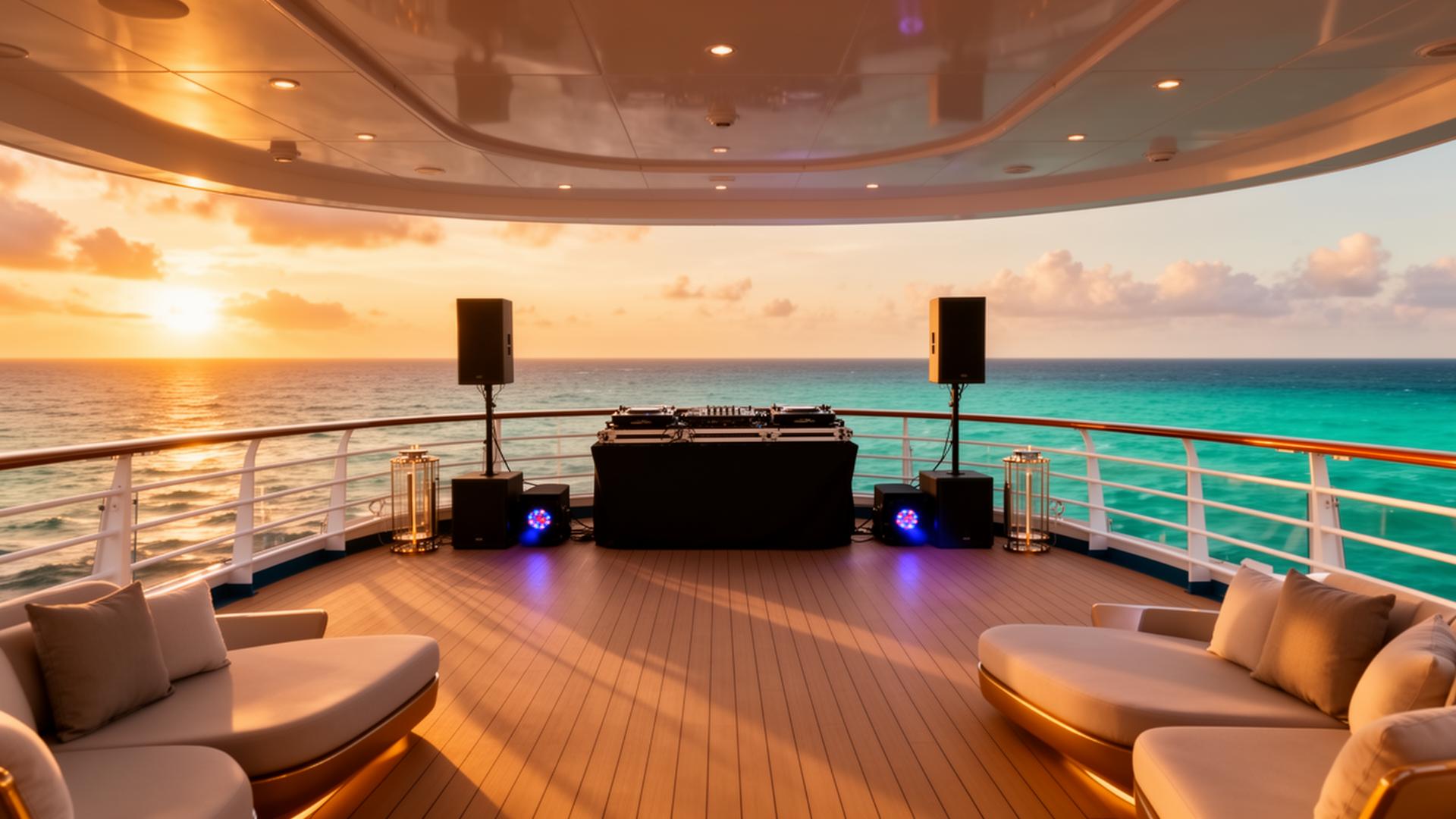
Cruise entertainment programming in 2026 is no longer defined by theatre shows alone. Modern cruise lines and luxury yacht operators now integrate DJs, live musicians, and guest entertainers across multiple onboard venues and dayparts. The result: a layered entertainment strategy that drives guest satisfaction, increases onboard spend, and creates a distinctive brand identity at sea.
Key Takeaways
- • Cruise entertainment now spans four layers: theatre, live music, DJ programming, and guest enrichment.
- • DJs are essential for pool decks, sunset terraces, and onboard nightlife venues.
- • Luxury yachts increasingly use resident DJs and private musicians for daily atmosphere programming.
- • Structured entertainment calendars across dayparts reduce ad-hoc booking costs and improve consistency.
- • Ibiza-based artist networks offer cruise operators access to internationally experienced, versatile performers.
Why Cruise Ship Entertainment Has Evolved Beyond Theatre Shows
For decades, cruise entertainment meant one thing: the main stage production. Broadway-style revues, comedy acts, and variety performers filled the theatre every evening.
That model still exists. But it is no longer enough.
Today's cruise guests expect entertainment throughout the day, not just after dinner. They want curated music at the pool. They want sunset moments on the upper deck. They want late-night energy in the lounge bar. And they want it all to feel intentional, not like background filler.
The shift mirrors what has already happened on land. Beach clubs, luxury hotels, and resort venues have moved from occasional live music to structured residency programs and daily programming calendars. Cruise lines are now following the same path.
The reason is simple. Entertainment is no longer a cost centre. It is a revenue driver. Ships that programme the right music at the right time in the right venue see measurable increases in F&B spend, guest retention scores, and social media engagement.
The 4 Layers of Cruise Ship Entertainment Programming
Understanding cruise entertainment requires a framework. Every modern cruise ship operates on four distinct entertainment layers. Each serves a different purpose, and each requires a different programming approach.
| Layer | Description | Key Talent | Primary Venue |
|---|---|---|---|
| 1. Theatre Shows | Main stage productions, headliners, comedy acts | Production cast, guest headliners | Main theatre |
| 2. Live Music & Bands | Acoustic sets, jazz combos, cover bands, instrumental performers | Musicians, bands, soloists | Lounges, restaurants, atrium |
| 3. DJ & Nightlife | Pool parties, sunset sessions, late-night club sets | DJs, resident DJs | Pool deck, nightclub, terraces |
| 4. Guest Entertainers | Specialty acts, enrichment lecturers, interactive performers | Special performers, speakers | Various onboard venues |
Most cruise lines execute layers one and two well. The opportunity lies in layers three and four, where programming is often inconsistent or entirely reactive.
A ship that treats DJ programming with the same strategic rigour as its theatre schedule gains a significant competitive advantage. The same applies to guest entertainers and enrichment programming.
Where DJs Fit Into Cruise Entertainment Today
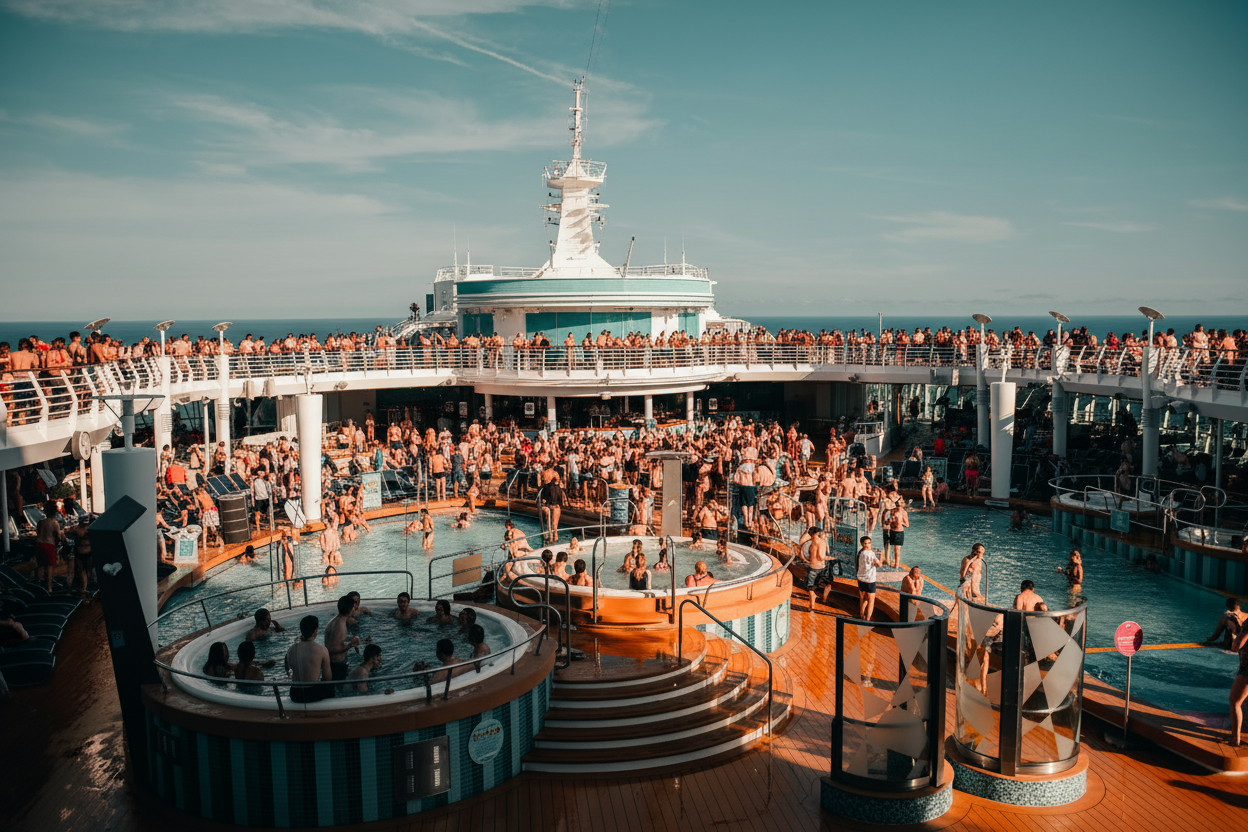
DJs are no longer reserved for the nightclub at midnight. On modern cruise ships, DJ programming spans five key venue types across the entire day.
Pool Decks
The pool area is the daytime heartbeat of every cruise ship. Background playlists do not create atmosphere. A curated DJ set between 11:00 and 16:00 transforms a passive pool experience into an active, engaging environment. The energy level should match the venue: relaxed deep house and tropical grooves, not peak-time club music.
Sunset Terraces
The sunset window, typically 17:00 to 19:30, is the most emotionally powerful moment of any day at sea. A resident DJ playing melodic house or balearic sounds during this window creates a signature experience that guests remember and share on social media.
Beach-Club Style Areas
Several modern cruise ships now feature dedicated beach-club style venues onboard. These spaces are modelled after Mediterranean beach clubs and require the same entertainment programming structure: a slow build from midday lounge to late-afternoon energy, with a peak moment before dinner.
Lounge Bars
Cocktail lounges benefit from early-evening DJ sets, typically 19:00 to 22:00. The format is subtle: low-volume house, nu-disco, or soulful grooves that complement conversation without competing with it. This approach drives pre-dinner and post-dinner drinks revenue.
Night Venues
Late-night programming, 22:00 to 02:00, is where DJs deliver peak-energy sets. This is the most traditional DJ placement, but it benefits enormously from being part of a broader daily arc rather than a standalone booking.
Live Musicians and Performers Onboard
DJ programming is one half of the equation. Live musicians and performers provide the texture and variety that prevents any entertainment programme from feeling repetitive.
Jazz Musicians
Jazz combos and solo pianists remain essential for cocktail hours, specialty restaurants, and late-evening lounge settings. The format is proven, but the curation matters. A jazz trio playing the same setlist every night loses impact by day three of a seven-day voyage.
Acoustic Acts
Singer-songwriters and acoustic duos work exceptionally well on open decks during the late afternoon. Their organic, human sound contrasts beautifully with the electronic textures of DJ programming earlier in the day.
Instrumental Performers
Saxophonists, violinists, and percussionists can operate as standalone acts or alongside DJs. The DJ-plus-saxophone combination has become a signature format in Mediterranean beach clubs and hotel venues, and it translates directly to cruise ship environments.
Special Entertainers
Fire performers, aerialists, LED acts, and interactive entertainers add visual spectacle to key programming moments. These acts are most effective when used strategically, for example during themed nights, sail-away parties, or gala evenings, rather than on a daily rotation.
Luxury Yachts and Private Charter Entertainment
The luxury yacht segment operates under completely different parameters than commercial cruise lines, but the underlying entertainment principles are the same.
Ultra-high-net-worth yacht owners and charter guests increasingly request resident DJs and private musicians as part of their charter experience. This is not about booking a performer for a single evening. It is about having a dedicated music curator onboard for the entire voyage.
A resident DJ on a private yacht serves multiple functions. They manage the daily atmosphere from morning to night. They adapt to the mood and preferences of the owner and guests in real time. And they eliminate the need for the crew to manage playlists or sound systems.
For charter operators, offering entertainment as part of the charter package creates a premium positioning. It distinguishes the vessel from competitors and justifies higher charter rates. Understanding how entertainment programming works helps operators design packages that feel bespoke, not improvised.
Typical luxury yacht entertainment setups include a resident DJ for 7 to 14 days, an acoustic musician for dinner service, and optional special performers for embarkation or celebration events.
Designing an Onboard Entertainment Calendar
The most effective cruise entertainment strategies follow a daily arc, not a random schedule. Every daypart has a specific energy level, and the entertainment should match it precisely.
Cruise Ship Weekly Entertainment Calendar
| Daypart | Time | Venue | Format | Energy |
|---|---|---|---|---|
| Morning | 08:00 - 11:00 | Pool deck, atrium | Curated playlist / ambient | Low |
| Midday | 11:00 - 14:00 | Pool deck | Resident DJ set | Medium |
| Afternoon | 14:00 - 17:00 | Pool / beach club area | DJ + live musician | Medium-High |
| Sunset | 17:00 - 19:30 | Upper deck terrace | Resident DJ sunset session | Medium |
| Dinner | 19:00 - 22:00 | Restaurants, lounges | Live jazz / acoustic act | Low-Medium |
| Late Night | 22:00 - 02:00 | Nightclub, lounge bar | DJ club set | High |
Luxury Yacht Daily Entertainment Schedule
| Daypart | Time | Location | Format |
|---|---|---|---|
| Morning | 09:00 - 12:00 | Sun deck | Resident DJ ambient set |
| Afternoon | 13:00 - 17:00 | Beach club / swim platform | Resident DJ + optional percussionist |
| Sunset | 17:30 - 19:30 | Upper deck | DJ sunset session |
| Dinner | 20:00 - 22:30 | Aft deck dining | Live acoustic musician |
| Evening | 22:30 - late | Main salon / upper deck | DJ session (guest preference) |
The principle is consistent across both formats: build energy gradually, create a signature sunset moment, transition into refined dinner atmosphere, and offer late-night energy for guests who want it.
Common Mistakes Cruise Entertainment Teams Make
Even experienced entertainment directors fall into patterns that reduce programming effectiveness. Here are the most common ones.
1. Treating DJ Programming as Filler
When DJs are booked to fill empty slots rather than to serve a specific atmospheric purpose, the result is inconsistent energy and confused guests. Every DJ set should have a defined role within the daily arc.
2. Booking Talent Without Venue Context
A DJ who excels in a nightclub may not be suitable for a pool deck sunset session. Talent must be matched to the specific onboard venue, daypart, and guest demographic.
3. No Continuity Between Voyages
When entertainment talent changes every voyage without a consistent programming framework, the brand identity suffers. Residency programs solve this by providing continuity across weeks or entire seasons.
4. Ignoring the Afternoon Window
Many ships programme entertainment in the evening but leave the 14:00 to 18:00 window underserved. This is precisely when guests are most receptive to curated music experiences on open decks.
5. Volume Mismanagement
Sound levels that work in a nightclub will clear a pool deck within minutes. Entertainment directors must provide clear volume guidelines for each venue and daypart, and verify compliance daily.
6. No Integration Between Entertainment Layers
When the theatre team, the music team, and the DJ team operate in silos, scheduling conflicts and tonal inconsistencies emerge. A unified entertainment calendar, managed by a single programming lead, prevents this.
KPIs That Measure Entertainment Success Onboard
Entertainment success on cruise ships and yachts should be measured with the same discipline applied to any other operational department.
| KPI Category | Metric | How to Measure |
|---|---|---|
| Revenue | F&B spend per guest during entertainment hours | POS data by venue and time slot |
| Engagement | Venue occupancy during programmed vs. unprogrammed hours | Headcount or sensor tracking |
| Satisfaction | Guest survey scores for entertainment | Post-voyage surveys |
| Social Impact | Social media mentions, tagged content, user-generated videos | Social listening tools |
| Retention | Repeat booking rate, loyalty programme engagement | CRM data |
| Operational | Programming consistency score (planned vs. delivered) | Internal entertainment ops reports |
The most overlooked metric is the correlation between entertainment programming and F&B revenue. Ships that track this consistently find that well-programmed venues generate 15 to 30 percent higher spend per guest compared to unprogrammed periods.
Why Ibiza-Based Artist Networks Are Valuable for Cruise Programming
Ibiza has spent decades developing the world's most concentrated ecosystem of professional DJs, musicians, and entertainers. This is not about celebrity bookings. It is about access to a deep pool of 100+ Ibiza-based artists who understand how to read a room, adapt to different audiences, and deliver consistently across weeks or months.
For cruise operators and yacht owners, this network offers several practical advantages.
First, versatility. Ibiza-based DJs are trained to play across genres and energy levels, from ambient pool sessions to high-energy nightclub sets. They are accustomed to reading international audiences and adjusting in real time.
Second, reliability. Artists who perform residencies in Ibiza's most demanding venues, six nights a week for entire seasons, bring a level of professionalism and endurance that one-off booking artists often cannot match.
Third, cultural credibility. Having artists connected to the Ibiza music scene adds brand value to any cruise line or yacht operation. It signals sophistication and musical authority.
Venue Entertainment, based in Ibiza, curates entertainment programming and residency programs worldwide. For cruise operators, this means access to a vetted, international roster of DJs, live musicians, and guest entertainers who can deliver consistent quality across entire seasons and multiple destinations.
Practical Checklist for Cruise Entertainment Managers
10-Step Entertainment Programming Checklist
- 1. Audit your current programming gaps. Map every venue and daypart. Identify where entertainment is missing or inconsistent.
- 2. Define energy levels per venue. Assign a target energy level (low, medium, high) to each space and time slot before booking any talent.
- 3. Create a unified daily entertainment arc. Build a programming flow from morning ambient through sunset peak to late-night energy.
- 4. Separate DJ programming from nightlife. DJs serve multiple dayparts. Do not limit their use to the nightclub.
- 5. Implement residency contracts. Replace single-voyage bookings with multi-week or seasonal residencies for core positions.
- 6. Brief every artist on venue-specific requirements. Volume levels, setlist guidelines, dress code, and guest interaction expectations must be documented.
- 7. Integrate live musicians into the daily schedule. Acoustic acts and jazz combos should complement, not compete with, DJ programming.
- 8. Track F&B revenue correlation. Compare per-guest spend during programmed vs. unprogrammed hours in each venue.
- 9. Collect guest feedback by venue. Add entertainment-specific questions to post-voyage surveys, broken down by venue and daypart.
- 10. Plan 3 to 6 months ahead. Entertainment programming should follow the same planning cycle as itinerary and shore excursion development.
Frequently Asked Questions
How does cruise ship entertainment programming work?
Cruise ship entertainment programming structures live shows, DJ sets, musicians, and guest entertainers across multiple onboard venues and dayparts. Modern programming follows a daily arc from relaxed morning ambience through energetic afternoon pool sessions, curated sunset moments, refined dinner atmosphere, and late-night nightclub energy.
Do cruise ships hire DJs?
Yes. Most modern cruise lines hire DJs for pool deck programming, sunset sessions, lounge bars, and dedicated nightclub venues. DJs are increasingly booked on multi-week residency contracts rather than single-voyage engagements, ensuring programming consistency and brand alignment.
What kind of music works best on cruise ships?
The best music for cruise ships varies by venue and time of day. Pool decks work well with deep house and tropical grooves. Sunset terraces suit melodic house and balearic sounds. Dinner venues require jazz, acoustic, or instrumental music. Nightclubs accommodate commercial dance, house, and disco formats.
What is the role of guest entertainers onboard?
Guest entertainers include specialty performers such as aerialists, fire artists, LED acts, enrichment speakers, and interactive performers. They add variety and visual spectacle to the entertainment calendar and are typically scheduled for themed nights, gala events, and sail-away parties.
How do luxury yachts handle entertainment programming?
Luxury yacht entertainment is typically managed through a resident DJ and, optionally, a private musician booked for the entire charter duration, typically 7 to 14 days. The DJ manages daily atmosphere from morning to night, adapting to guest preferences in real time.
What is a resident DJ program for cruise ships?
A resident DJ program assigns a dedicated DJ to a specific cruise ship or yacht for multiple weeks or an entire season. The resident DJ learns the vessel's venues, understands the guest demographic, and delivers consistent programming across all dayparts, from pool sessions to late-night sets.
How far in advance should cruise entertainment be planned?
Entertainment programming should be planned 3 to 6 months before the season begins. This allows time for artist sourcing, contract negotiation, venue-specific briefing, and integration with the broader itinerary and event calendar.
What is the difference between entertainment programming and talent booking?
Talent booking fills individual slots with available performers. Entertainment programming designs a cohesive, strategic calendar that defines energy levels, genre guidelines, and artist requirements for every venue and daypart. Programming creates consistency. Booking creates gaps.
Can DJs work alongside live musicians on cruise ships?
Yes, and this combination is increasingly common. A DJ paired with a saxophonist or percussionist creates a richer, more dynamic sound. This format works exceptionally well on pool decks and sunset terraces, where the live element adds emotional depth to electronic music.
Why do cruise lines use Ibiza-based DJs?
Ibiza-based DJs bring versatility, international experience, and cultural credibility. They are trained to perform across multiple genres and energy levels, read diverse international audiences, and deliver consistently over extended residency periods, exactly the skills required for cruise entertainment.